Mortar is supposed to be the weak link in a brick chimney. It is designed to be softer than the brick so that when the masonry expands, contracts and absorbs water, the mortar takes the wear instead of the brick. That also means mortar joints wear out first. When they do, water gets into the wall, and in a Michigan winter that water freezes, expands and starts breaking the bricks themselves. Tuckpointing, also called repointing, replaces worn mortar before that happens.
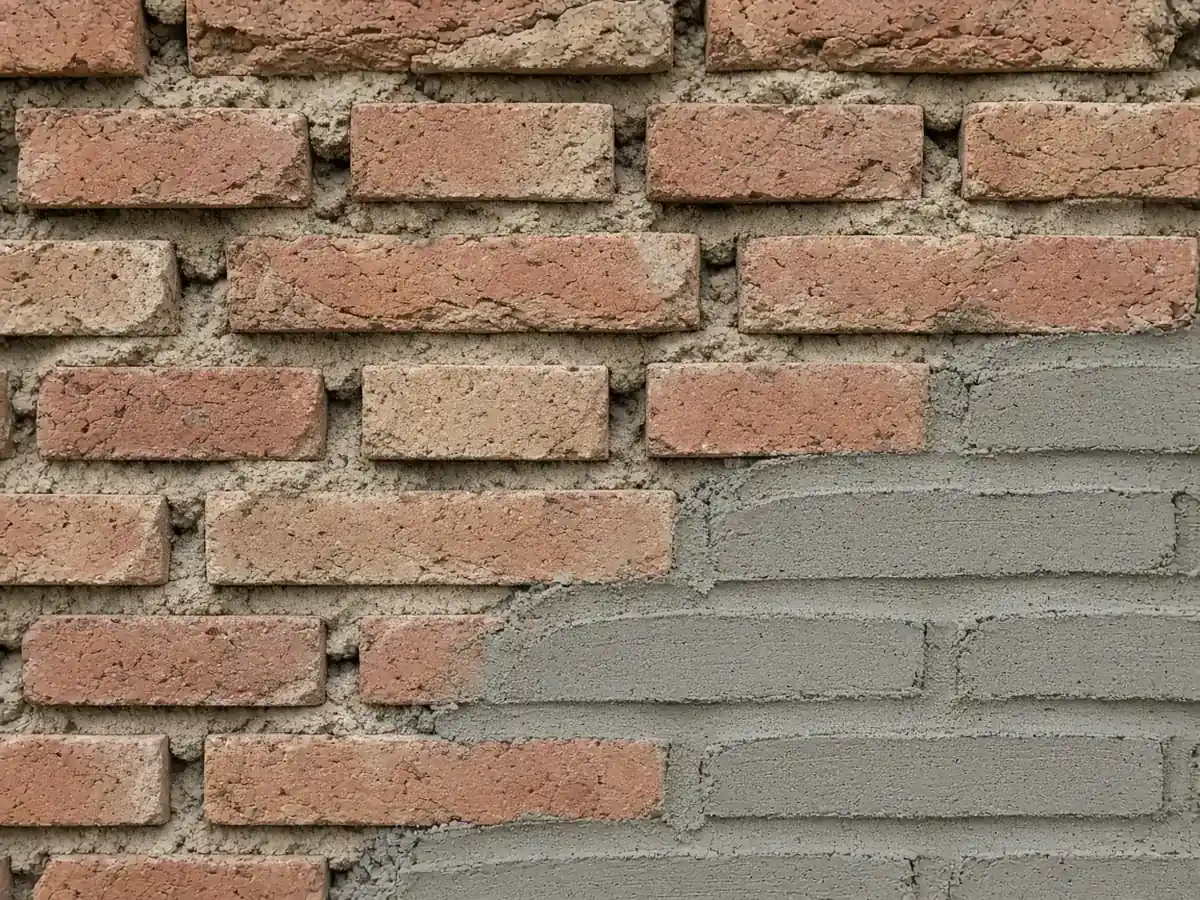
This page explains how to spot failing mortar and brick, how tuckpointing and brick replacement are done, why the right mortar matters, and when masonry repair is no longer enough.
Signs Your Chimney Needs Masonry Repair
- Mortar joints that are recessed, sandy, cracked or missing.
- Gaps you can see light through or fit a coin into.
- Brick faces that are flaking, crumbling or popping off, known as spalling.
- Pieces of brick or mortar on the roof, in the gutters, or on the ground.
- White, powdery deposits on the brick, called efflorescence, which show that water is moving through the masonry.
- Dark, damp-looking areas on the chimney that stay wet long after rain.
- Green moss or algae growth on the brick.
- Water stains inside the house near the chimney.
You can check much of this from the ground with binoculars. Look closely at the top few feet of the chimney and the corners, which usually deteriorate first because they take the most weather.
Why Freeze-Thaw Cycles Are So Hard on Brick
Brick and mortar absorb water like a hard sponge. Water that soaks in during a rainy fall day or from melting snow can freeze overnight. Water expands by roughly nine percent when it turns to ice, and that pressure pushes from inside the masonry. One freeze does little damage, but Southeast Michigan sees many freeze-thaw cycles over a typical winter. Each cycle opens cracks a little more and lets in a little more water the next time.
Once mortar joints are open, water can reach the inside of the chimney, the flue tiles and the framing around it. Spalled bricks lose their hard outer face, and the softer interior absorbs water even faster. That is why masonry damage often seems to accelerate: a chimney that looked fine for years can deteriorate quickly once the joints open.
How Tuckpointing Is Done
- Assessment. The mason identifies which joints and bricks need work. Sometimes only the top section or one side of the chimney needs attention.
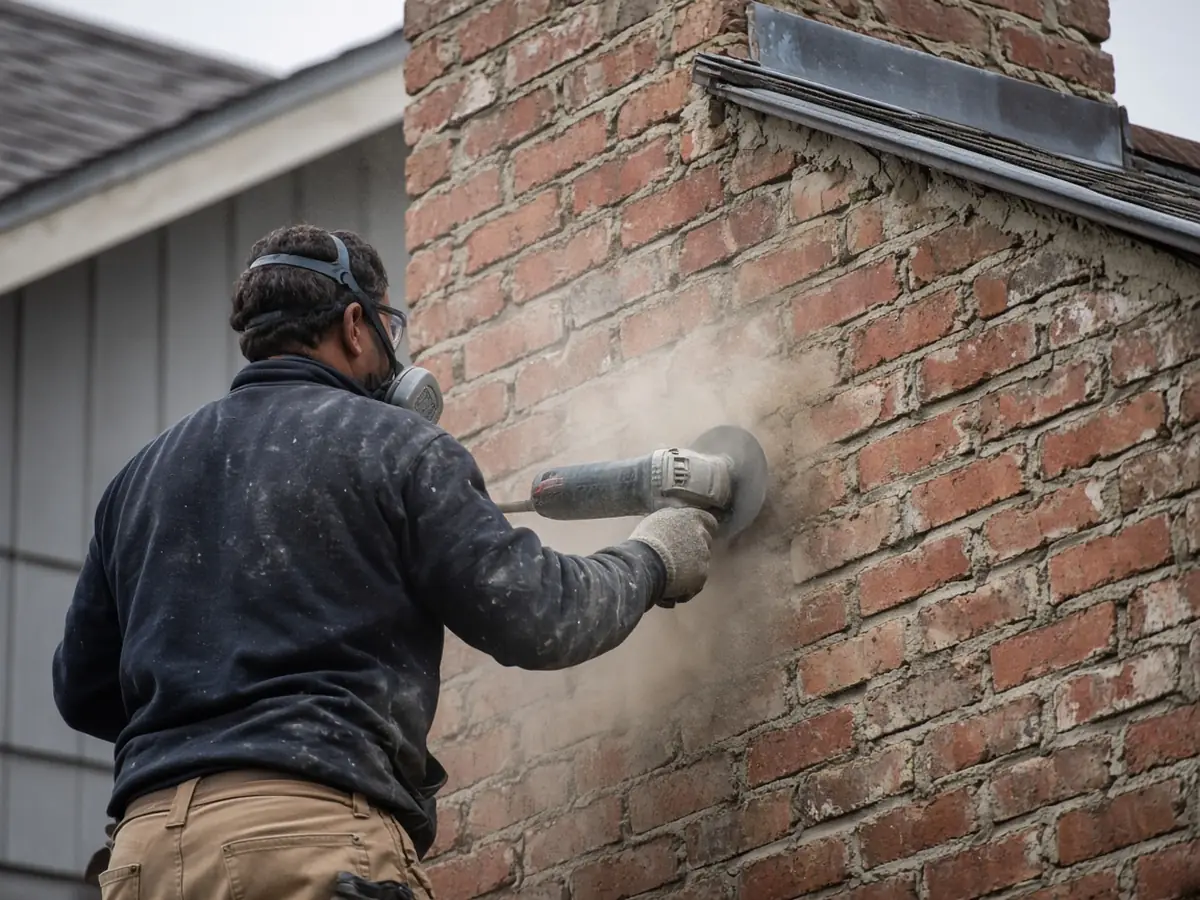
- Grinding or raking out. Old, failed mortar is removed from the joints to a consistent depth, generally at least about two to two and a half times the width of the joint, so the new mortar has something solid to bond to.
- Cleaning. Dust and debris are brushed or blown out, and the joints are dampened so the dry brick does not pull water out of the new mortar too quickly.
- Repointing. New mortar is packed into the joints in layers and compressed.
- Tooling. Once the mortar firms up, the joints are shaped with a jointing tool, usually to a concave profile that sheds water and compresses the surface.
- Curing. Fresh mortar needs to cure without freezing or drying out too fast, which is why most tuckpointing in Michigan is done between spring and fall.
Replacing Spalled or Broken Bricks
When individual bricks are badly spalled or cracked, a mason can chisel them out and slide in replacement bricks, setting them in fresh mortar. This keeps the chimney structurally sound and stops water from entering through the soft, exposed brick interior. Matching color and size is easier for a few bricks than for a large area, and salvaged or reclaimed brick sometimes gives the best match on older homes.
If spalling is widespread, especially across the upper portion of the chimney, replacing brick one by one can cost nearly as much as rebuilding that section. In that case a partial chimney rebuild may be the better value.
Why the Right Mortar Matters
Not all mortar is the same. Mortar types are rated by strength, and stronger is not always better. If the new mortar is harder and less flexible than the brick, the masonry cannot move and breathe the way it was designed to, and the brick faces may crack and spall around the joints. Older homes and softer brick generally need a softer mortar. A knowledgeable mason chooses a mortar that is compatible with the existing brick and matches the color and texture of the original joints as closely as possible.
Another common problem is surface patching, where someone smears new mortar or caulk over the old joints without removing the failed material. It looks better for a season and then falls out, often trapping water behind it. Proper tuckpointing always removes the old mortar first.
Masonry Repair Beyond the Mortar Joints
Chimney masonry repair also includes:
- Crown repair. The crown on top of the chimney protects the masonry below. See chimney crown repair.
- Shoulder and wash repair. Exterior chimneys often have sloped shoulders where the chimney narrows, and these need to shed water properly.
- Firebox repair. The firebrick and refractory mortar inside the fireplace take direct heat and wear out separately from the exterior. See fireplace repair.
- Waterproofing. Once repairs have cured, a breathable water repellent can significantly reduce how much water the brick absorbs. See chimney waterproofing.
What Affects the Cost of Tuckpointing
- How many square feet of joints need to be repointed.
- Whether bricks need to be replaced, and how many.
- Height of the chimney and pitch of the roof.
- Mortar matching requirements.
- Whether the job is combined with crown, flashing or waterproofing work, which often makes the overall project more efficient.
Ask the mason to show you photos of the joints they plan to repoint and explain whether they are doing selected areas or the full chimney.
How Long Does Tuckpointing Last?
Properly done tuckpointing with compatible mortar typically lasts many years, often decades, especially when the crown, cap and flashing are in good shape and water is kept out of the top of the chimney. Mortar that fails within a few years usually points to an underlying water problem, a poor mortar choice, or work done in freezing conditions.
Tuckpointing Questions
What is the difference between tuckpointing and repointing?
In everyday use, the terms mean the same thing: removing deteriorated mortar from joints and replacing it with new mortar. Technically, tuckpointing refers to a decorative technique using two mortar colors, but most homeowners and contractors use the words interchangeably.
Can I tuckpoint my chimney myself?
Small, low areas of brick can be repointed by a careful DIYer, but chimney work involves roof access, fall hazards, and choosing the right mortar. Most homeowners are better served hiring a professional for chimney masonry.
When is the best time of year for tuckpointing in Michigan?
Late spring through early fall, when temperatures stay above freezing day and night. Mortar needs time to cure, and freezing temperatures can ruin fresh joints.