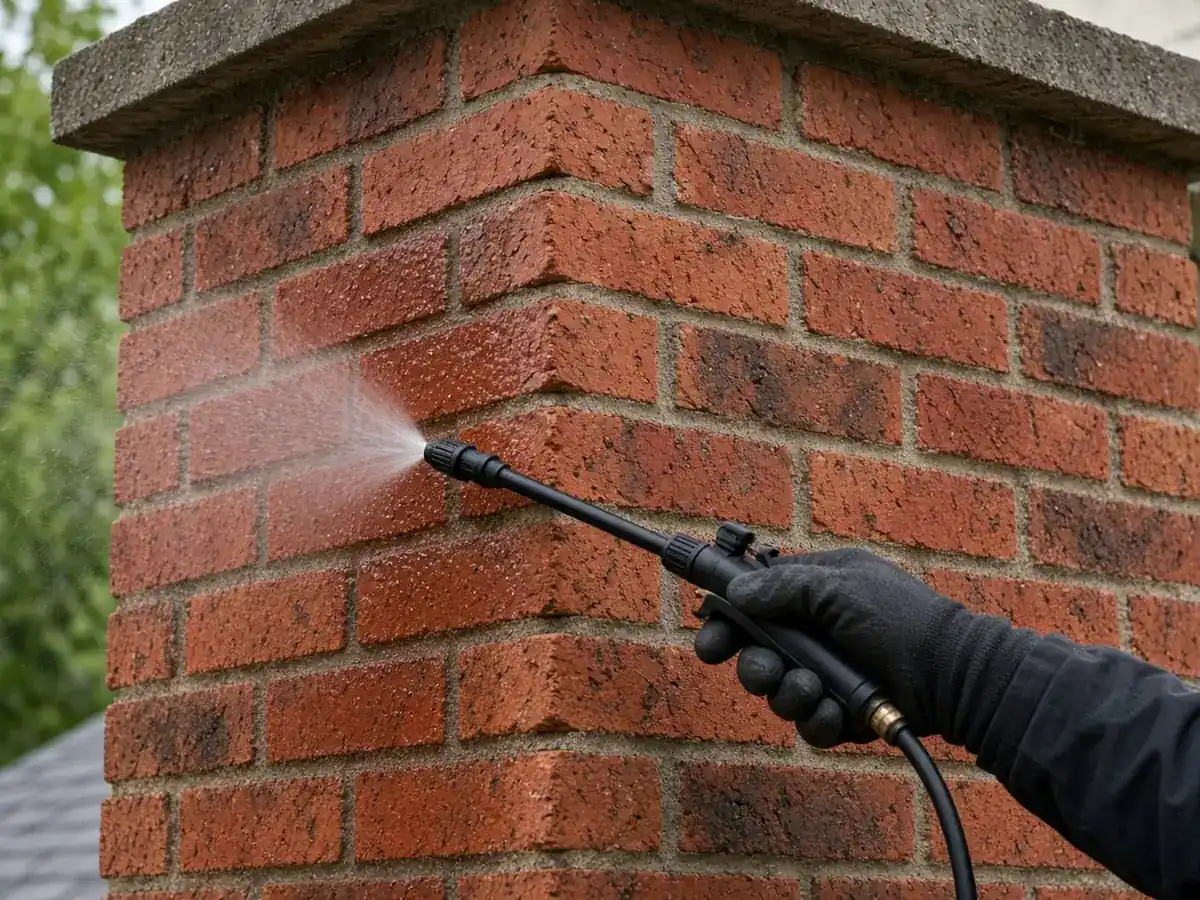
Brick looks solid, but it is porous. A typical brick chimney absorbs a surprising amount of water every time it rains or snow melts against it. In a climate with many freeze-thaw cycles like Southeast Michigan, that absorbed water is what breaks down mortar, causes bricks to spall, and eventually leads to leaks and costly repairs. Chimney waterproofing applies a water repellent to the masonry that keeps most liquid water out while still letting the chimney breathe. Done correctly and with the right product, it is one of the best ways to extend the life of a chimney.
How Water Damages a Chimney
When water soaks into brick and mortar, several things happen:
- Freeze-thaw damage. Water expands when it freezes, cracking mortar joints and popping the faces off bricks.
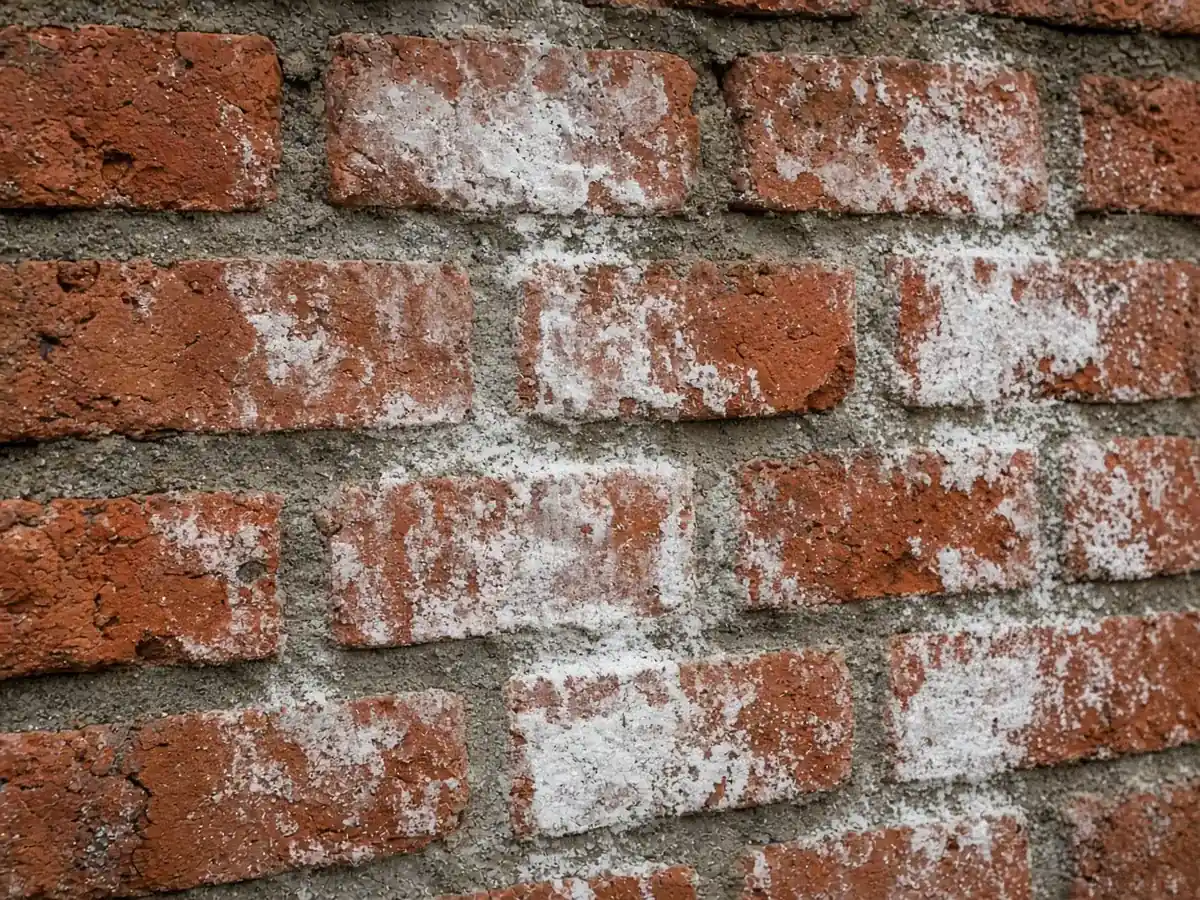
- Efflorescence. As water moves through masonry and evaporates, it leaves behind white, chalky mineral deposits.
- Rust and corrosion. Water reaches dampers, steel lintels, and other metal parts and rusts them.
- Interior damage. Water travels through the chimney into walls, ceilings and attic framing.
- Liner damage. Water entering the flue can damage clay tiles and mortar joints.
- Mold and odors. Damp masonry next to living spaces can cause musty odors and mold growth on adjacent materials.
Why Breathable Waterproofing Matters
Not all sealers are right for chimneys. The key is vapor permeability. A chimney naturally contains some moisture from the inside, from combustion gases and from the air. If you coat the outside with a non-breathable product, such as paint, ordinary clear sealer, or a film-forming coating, that moisture gets trapped. Trapped moisture freezes inside the masonry and can actually cause more spalling than an untreated chimney.
Chimney waterproofing products designed for masonry are usually silane or siloxane-based repellents that penetrate the surface and line the pores rather than forming a film. They repel liquid water while still allowing water vapor to escape. Many products made specifically for chimneys are designed to remain vapor-permeable while greatly reducing water absorption.
When to Waterproof a Chimney
Waterproofing works best on masonry that is in good repair. It is not a substitute for fixing failed mortar, spalled brick, a cracked crown or bad flashing. The right order is:
- Inspect and repair. Fix the crown, flashing, cap and any mortar or brick damage.
- Let repairs cure. New mortar and concrete need time to cure before a repellent goes on; the product manufacturer's directions specify how long.
- Clean the masonry. Dirt, moss, and efflorescence are removed so the repellent can penetrate evenly.
- Apply the repellent. The product is applied at the recommended rate and conditions, typically when the masonry is dry and temperatures are within the product's range.
Good candidates for waterproofing include chimneys that show efflorescence or dark, damp areas, chimneys that have just been repaired or rebuilt, chimneys made from softer or more porous brick, and chimneys on homes where leaks have already been fixed and the owner wants to keep it that way.
How Long Does Chimney Waterproofing Last?
The lifespan depends on the product, the exposure and the condition of the masonry. Quality penetrating water repellents commonly last many years. The best way to check is to watch how water behaves on the brick after rain: if it beads up and runs off, the repellent is working. If the brick darkens and soaks up water, it may be time to reapply. Your annual inspection is a good time to evaluate it.
Waterproofing and Freeze-Thaw Winters
Michigan winters are hard on masonry precisely because of how often temperatures cross the freezing point. Reducing the amount of water in the brick before winter reduces the amount that can freeze inside it. That is why waterproofing is commonly scheduled in late summer or fall after repairs, giving the product time to cure in dry, mild conditions before the heating season starts.
Things Waterproofing Will Not Fix
- Cracked crowns. The crown needs to be sealed or replaced.
- Missing caps. Rain and snow fall straight down the flue.
- Failed flashing. Water enters at the roofline, not through the brick.
- Open mortar joints. Gaps need to be tuckpointed first.
- Condensation. Moisture from gas appliances venting into an oversized flue is a liner issue.
If a chimney keeps leaking after waterproofing, one of these is likely the cause.
A Simple Test You Can Do From the Ground
You can get a rough idea of how much water your chimney absorbs without climbing on the roof. During or right after a steady rain, look at the chimney from the yard. Brick that turns noticeably darker and stays dark for hours after the rain stops is soaking up water. Brick that stays close to its normal color, with water beading and running off, is shedding it. Patchy results, where one side or the top few feet look darker than the rest, often point to a specific problem area such as a cracked crown, failed mortar joints near the top, or a spot where gutters or a roof valley spill water onto the chimney. Snap a few photos and share them when you request a quote; they help a professional understand what is happening before the visit.
Can I Waterproof My Own Chimney?
Penetrating water repellents are available to homeowners, but applying them to a chimney means working on a roof, often at height, and the results depend heavily on the condition of the masonry and correct application. A wrong product, such as a non-breathable sealer, can do real harm. Most homeowners have chimney waterproofing done by a professional as part of an inspection or repair.
What Affects the Cost of Waterproofing
- Size and height of the chimney.
- Whether the chimney needs cleaning before application.
- Whether repairs are needed first.
- Roof access.
- Product used.
Because waterproofing is often done together with crown, cap or tuckpointing work, combining jobs usually reduces the overall cost and the number of trips to the roof.
Chimney Waterproofing Questions
Will waterproofing change the look of my brick?
Penetrating, breathable repellents designed for masonry are generally clear and should not noticeably change the appearance of the brick when applied correctly. Film-forming sealers can leave a shiny or darkened finish and are not recommended for chimneys.
Should I paint my chimney to keep water out?
Ordinary paint traps moisture in masonry and can lead to spalling and peeling. If a painted look is wanted, talk to a professional about breathable masonry coatings designed for chimneys.
How soon after tuckpointing can a chimney be waterproofed?
New mortar needs to cure first. The waiting time depends on the mortar and the repellent manufacturer's directions, and weather conditions.