Chimney repair covers a wide range of work, from sealing a hairline crack in a crown to replacing an entire flue liner. What every repair has in common is that it starts with finding the real cause. A ceiling stain next to the fireplace might come from failed flashing, a cracked crown, porous brick or a missing cap, and patching the wrong thing wastes money while the damage keeps spreading. This guide explains the most common chimney problems in Sterling Heights homes, how each one is typically fixed, and how to tell whether you are looking at a small repair or something bigger.
If you already know you need help, use the quote form on this page or call. A local chimney professional will follow up to schedule an inspection and give you a written estimate.
The Most Common Chimney Problems in Sterling Heights
Water leaks
Leaks are the number one reason homeowners call about their chimney. Water can enter at the crown, through the brick and mortar, around the flashing, down an uncapped flue, or through a gap in a prefabricated chase cover. In Michigan, a leak often shows up in late winter or early spring when snow piled against the chimney melts and runs into every opening. Because water travels along framing and masonry before it appears, the stain inside is rarely directly below the entry point. A thorough inspection checks every possible entry point rather than guessing. Our chimney flashing and leak repair guide covers leaks in more detail.
Cracked or deteriorated crown
The crown is the slab on top of the chimney that sheds water away from the brick. Many older crowns in Sterling Heights were built with ordinary mortar instead of a proper concrete mix, with no overhang and no gap around the flue tile. These crack within a few winters. Small cracks can be sealed with a flexible crown sealant; crowns that are broken, crumbling or poorly designed should be rebuilt. See chimney crown repair.
Crumbling mortar and spalling brick
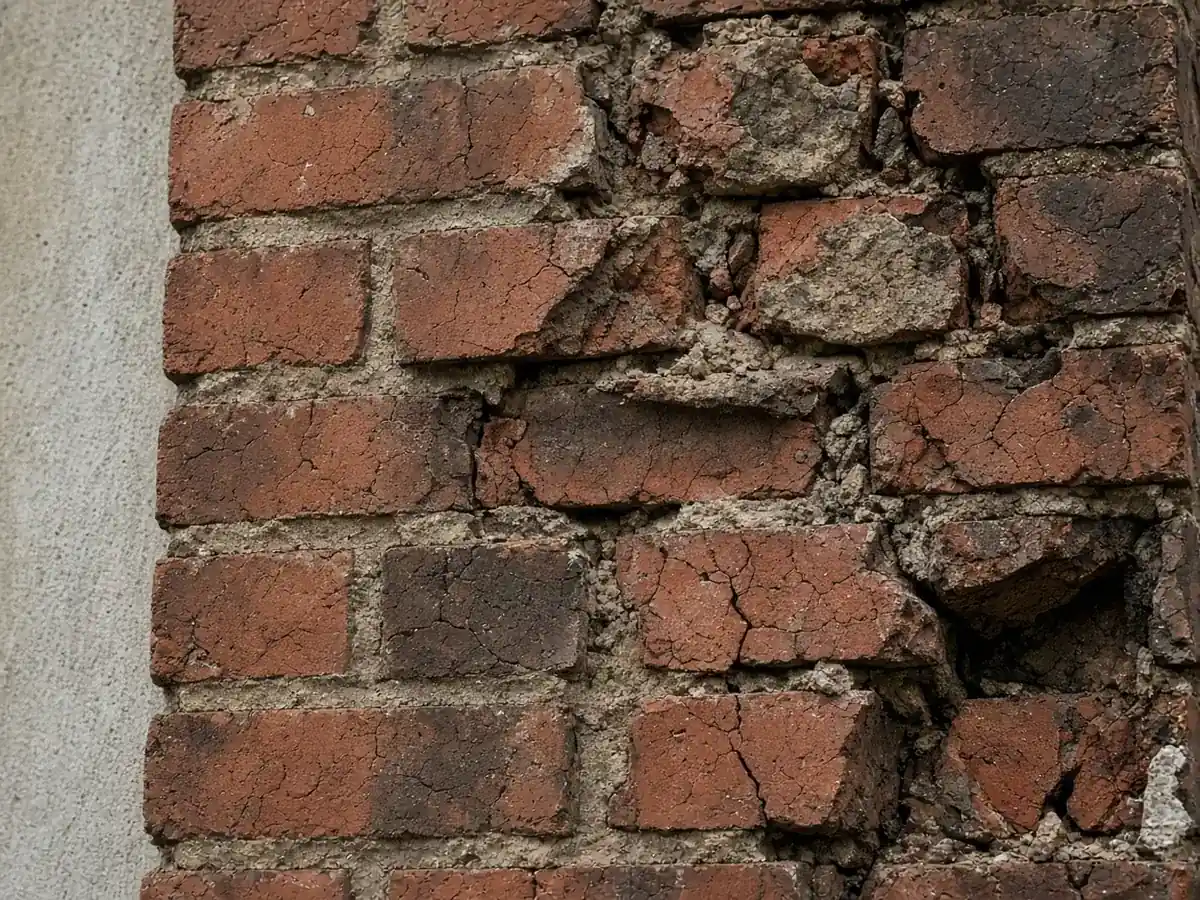
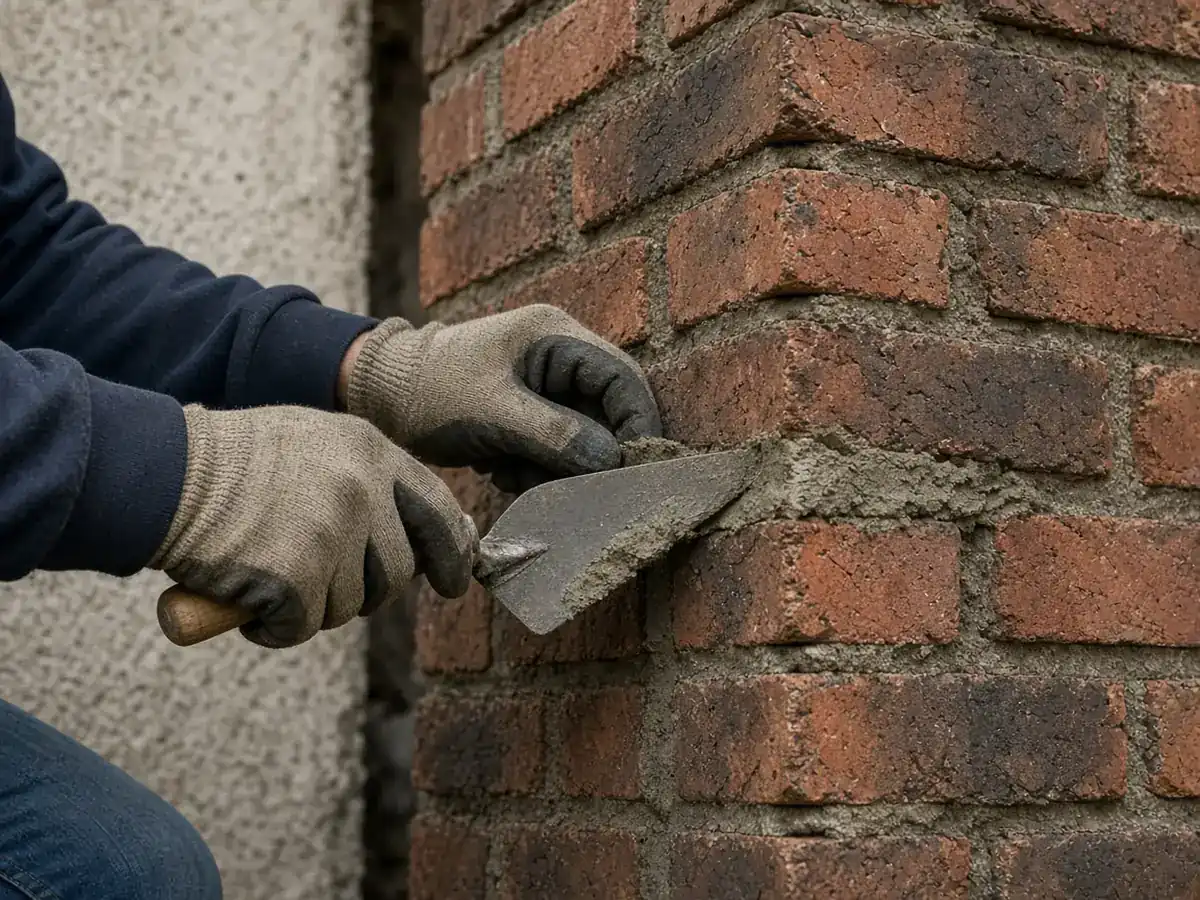
Mortar joints erode over time, and once they open up, water gets behind the face of the brick. When that water freezes, the brick face can pop off in flakes or chunks. This is called spalling. Replacing failed mortar is called tuckpointing or repointing, and badly spalled bricks can be cut out and replaced individually. When too much of the masonry has failed, especially above the roofline, a partial rebuild may be the more sensible fix. Read more about tuckpointing and masonry repair and chimney rebuilding.
Damaged or missing chimney cap
A cap keeps rain, snow, leaves and animals out of the flue. Without one, water pours straight down onto the smoke shelf and damper, and raccoons, squirrels and birds can move in. Caps also rust, blow off in storms or get crushed by falling branches. Replacing a cap is one of the least expensive chimney repairs and one of the most effective. See chimney caps and chase covers.
Cracked flue liner
The flue liner protects the house from heat and contains the corrosive gases that come off a fire or gas appliance. Clay tile liners can crack from a chimney fire, settling, or years of acidic condensation from a gas furnace. A cracked liner cannot be seen from the roof or the fireplace without a camera, which is why a video inspection matters. Repairs range from resurfacing to installing a new stainless steel liner. See chimney liner installation.
Rusted or broken damper
Steel throat dampers above the firebox rust when water gets into the chimney, and eventually they seize open or closed or fall apart. A stuck-open damper wastes heat all winter; a stuck-closed one makes the fireplace unusable. A common fix is a top-sealing damper mounted at the top of the flue, which doubles as a cap and seals much tighter than the original. See fireplace repair.
Draft and smoke problems
When a fireplace smokes into the room, the cause can be a blockage, a flue that is too short or too small for the fireplace opening, a cold flue, a tightly sealed house that is starving the fire of air, or nearby trees and rooflines creating downdrafts. Diagnosing draft problems takes some patience, and fixes range from a simple cleaning to a draft-improving cap, a smoke guard, or a change in how the fire is built.
How a Chimney Repair Visit Usually Works
A typical repair visit starts with an inspection. The technician looks at the chimney from the roof, checks the crown, cap, flashing and brick, then looks at the fireplace, damper and smoke chamber from inside. If there is a concern about the flue, they run a camera up the liner. Many professionals take photos as they go so they can show you exactly what they found.
From there you should get a written estimate that explains each recommended repair, why it is needed, and what it costs. Good estimates separate urgent work, such as anything that affects fire safety or lets water into the house, from items that can be planned for later. Small repairs such as cap installation or crown sealing can often be done the same day. Masonry work, crown rebuilding and liner installation are usually scheduled as a separate visit.
What Affects the Cost of Chimney Repair
Every chimney is different, so honest pricing only comes after someone has looked at it. These are the factors that move the price most:
- Access. A one-story ranch with a low-slope roof is far easier to work on than a two-story colonial with a steep roof. Steep or high roofs require more safety equipment and time.
- Height and size. Taller chimneys and chimneys with multiple flues take more material and labor.
- Extent of damage. Sealing a crown is a small job; rebuilding a crown and replacing spalled brick is a larger one.
- Materials. Matching older brick, custom-fabricated stainless caps and insulated liners all add cost.
- Permits. Some work, such as liners and rebuilds, may require a permit from the City of Sterling Heights.
- Season. Masonry and concrete work need above-freezing temperatures to cure, so winter schedules are limited and some repairs must wait until spring.
Repair or Replace?
Homeowners often ask whether it makes sense to keep repairing an old chimney or to rebuild it. A rough rule of thumb: if the damage is limited to the crown, cap, flashing or isolated mortar joints, repair almost always makes sense. If the masonry above the roofline is leaning, has large areas of loose or spalled brick, or the mortar is so soft it can be scraped out with a finger, a partial rebuild from the roofline up is often the better value because it resets the clock instead of chasing problems every year.
If you no longer use the fireplace and the chimney does not vent a furnace or water heater, removing it may be worth considering, especially if you are about to replace the roof. Our chimney removal guide explains the options.
Preventing Future Chimney Damage
Most chimney repairs come back to water. These steps keep repair bills down over the long run:
- Have the chimney inspected once a year, as recommended by the National Fire Protection Association's NFPA 211 standard.
- Make sure there is a properly fitted cap on every flue.
- Keep the crown sealed and repair cracks as soon as they appear.
- Consider a breathable, vapor-permeable water repellent on the brick. See chimney waterproofing.
- Keep trees trimmed back at least ten feet from the chimney.
- Watch for white staining, flaking brick and ceiling stains, and call early.
Chimney Repair Questions
Can a chimney be repaired in winter?
Some repairs can. Caps, chase covers, dampers and many flashing repairs can be done in cold weather. Mortar and concrete need temperatures above freezing to cure, so tuckpointing, crown rebuilding and rebuilds are usually scheduled for spring through fall. Temporary measures can often stop a leak until then.
Does homeowners insurance cover chimney repair?
Policies vary. Sudden damage, such as a tree falling on a chimney or a lightning strike, is more likely to be covered than damage from age, wear or long-term water intrusion. Check your policy and talk to your insurer before work begins if you plan to file a claim.
Is it safe to use my fireplace if the chimney needs repair?
It depends on the problem. A cracked crown or worn mortar on the outside may not affect safe use in the short term, but a cracked flue liner, heavy creosote, or a blockage can make the fireplace dangerous. If you are unsure, do not light a fire until the chimney has been inspected.