The chimney crown is the slab of concrete or masonry that covers the top of the chimney around the flue. You can usually see it from the street as the flat or slightly sloped surface just below the cap. Its job is simple: shed water off the top of the chimney and away from the brick. When the crown cracks, water goes straight into the heart of the chimney, and in Michigan that water freezes. A damaged crown is one of the most common causes of chimney leaks and masonry damage in Sterling Heights, and it is also one of the most affordable problems to fix when caught early.
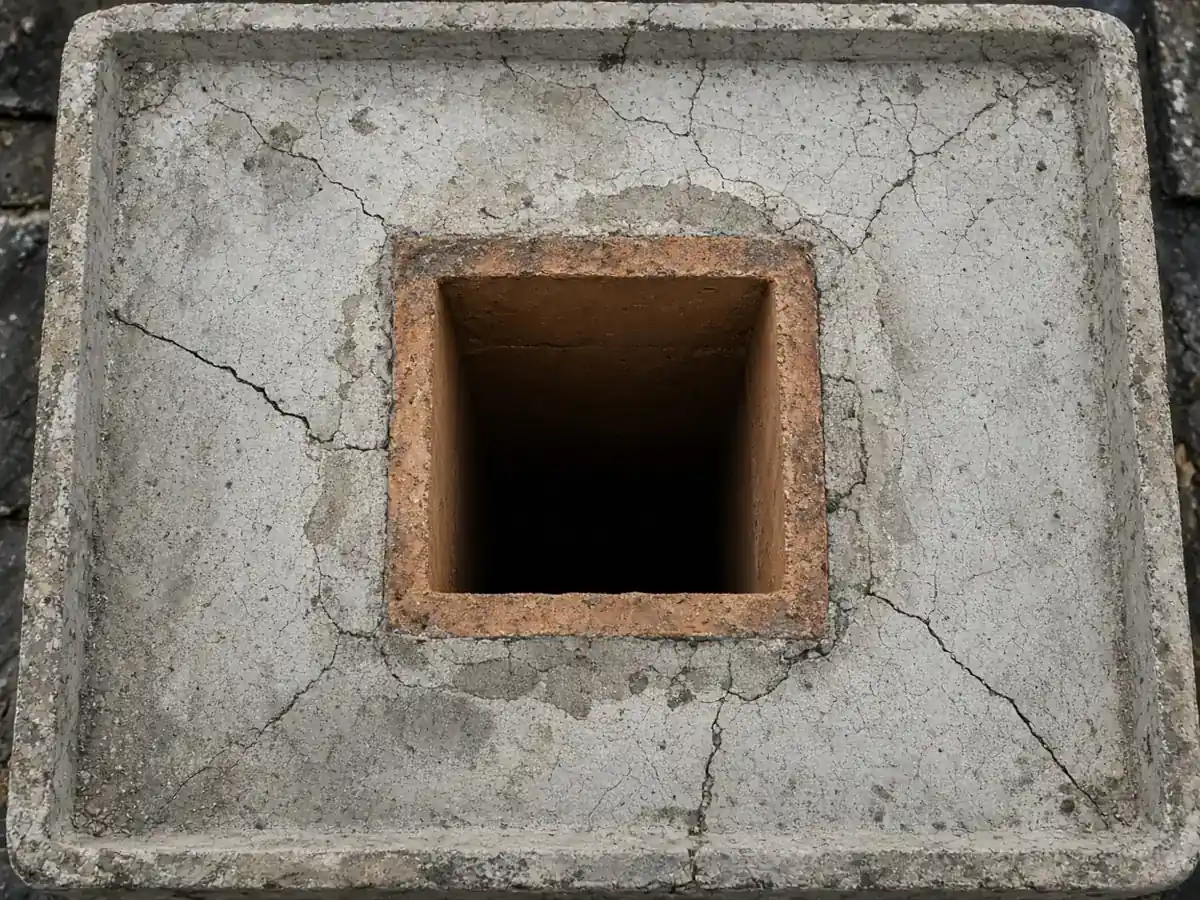
Why Crowns Crack
- Wrong materials. Many crowns, especially on older homes, were built with regular mortar instead of a concrete mix. Mortar is not designed to be a weather-exposed slab and cracks quickly.
- Too thin. A crown that is only an inch or so thick at the edges does not have the strength to resist temperature swings and freeze-thaw cycles.
- No overhang or drip edge. A good crown sticks out past the brick and has a groove underneath so water drips off instead of running down the chimney face. Many crowns are flush with the brick, so water sheets down the masonry.
- No expansion joint. The flue tile and the crown expand and contract at different rates. If the crown is cast tight against the flue tile without a bond break, the movement cracks the crown.
- Age and weather. Even a well-built crown wears with decades of sun, rain, snow and ice.
Signs of a Damaged Crown
- Visible cracks or missing chunks on top of the chimney.
- Pieces of concrete or mortar on the roof or in the gutters.
- Water in the fireplace or firebox, or a rusted damper.
- Spalling bricks or white staining near the top of the chimney.
- Ceiling or wall stains near the chimney, especially after snowmelt.
- Vegetation or moss growing on top of the chimney.
Crown Repair Options
Crown sealing
For a crown that is structurally sound but has hairline cracks, a flexible, waterproof crown sealant can be applied. These products are brushed on thick, bridge small cracks, and stay flexible through temperature changes. Sealing is quick and comparatively inexpensive, and it can add years of life to a crown that is in decent shape. It is not a fix for a crown that is crumbling, loose or badly designed.
Crown resurfacing
When a crown has wider cracks or surface deterioration but the base is still solid, a technician may fill the cracks and resurface it with a crown repair compound, then seal it. This can be a middle path between sealing and full replacement.
Crown rebuild or replacement
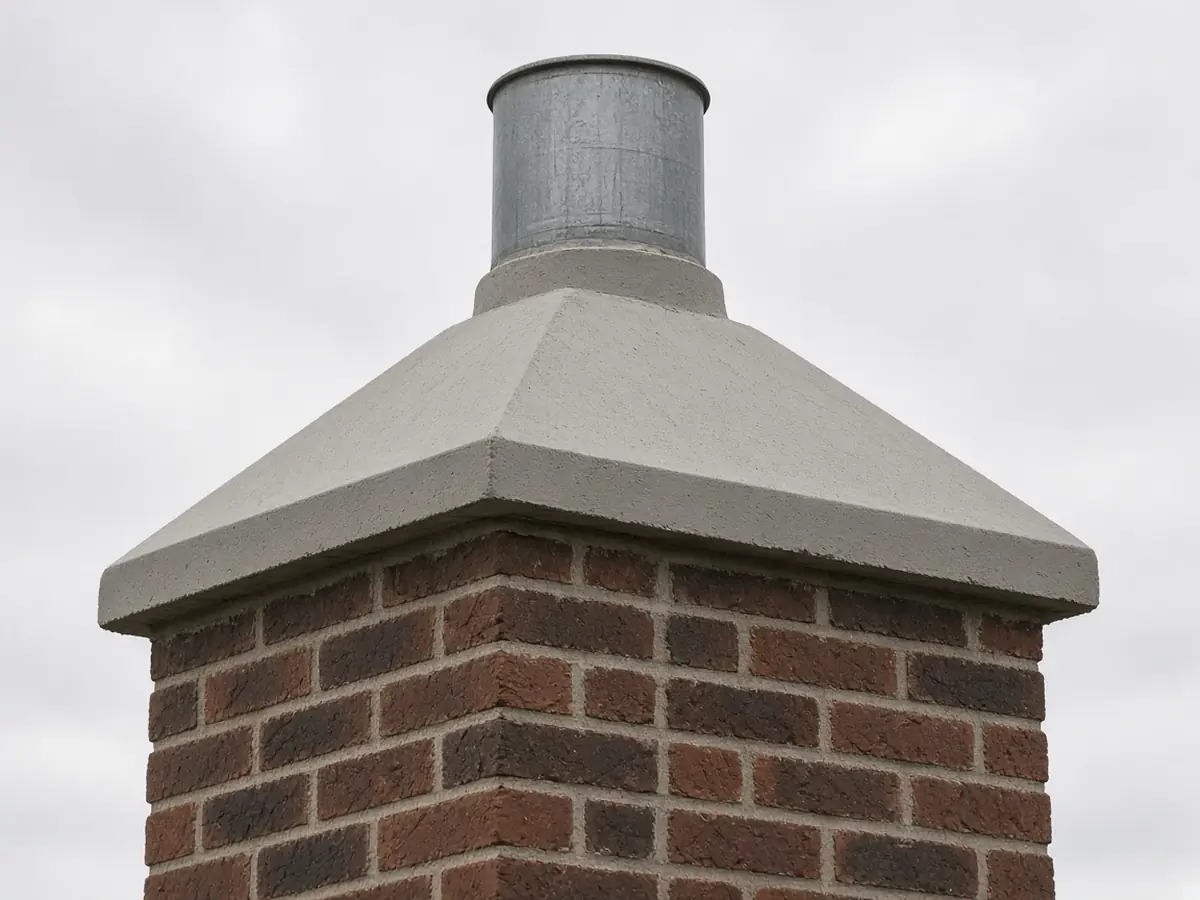
If the crown is broken, crumbling, too thin or built without an overhang, replacing it is the long-term fix. The old crown is removed, a form is built, and a new crown is poured or formed using a proper concrete or crown mix. A well-built crown typically:
- Slopes away from the flue so water runs off.
- Extends past the face of the brick with a drip edge cut underneath.
- Is thick enough to resist cracking, especially at the edges.
- Has a bond break or flexible sealant joint between the crown and the flue tile.
- Is steel-reinforced in many cases, especially on larger crowns.
Some contractors also offer precast crowns or stainless steel chimney covers that fit over the entire top of the chimney. These can be a good option on multi-flue chimneys.
Crown Repair and Freeze-Thaw Winters
Crown work involves concrete and sealants that need suitable temperatures to cure. Pouring a new crown is usually scheduled in warmer months. If a crown fails in winter and water is pouring into the chimney, a temporary fix such as a sealant application on a dry day, a tarp, or a full-width chimney cover can limit damage until a permanent crown can be built.
Because the crown protects everything below it, crown repair is often combined with other work. If the top courses of brick are loose or spalled, they should be repaired before a new crown goes on. A new cap usually goes on at the same time, and the whole chimney can be treated with a breathable water repellent once the work has cured.
How Crown Problems Lead to Bigger Repairs
A cracked crown lets water into the core of the chimney. Over a few winters, that water can:
- Push apart the top courses of brick, leading to a partial rebuild.
- Rust the damper and smoke chamber components inside the fireplace.
- Crack flue tiles and soak the mortar between them, which may lead to a new liner.
- Wet the framing and drywall around the chimney, leading to stains, rot and mold.
Compared with any of those, sealing or replacing a crown is a small expense, which is why crown inspection is part of every routine chimney inspection.
What Affects the Cost of Crown Repair
- Sealing vs. resurfacing vs. full replacement.
- Size of the chimney top and the number of flues.
- Roof height, pitch and access.
- Whether the top courses of brick need repair first.
- Whether a cap or full-width cover is added.
When you compare quotes, ask exactly what each contractor is proposing. "Crown repair" can mean anything from a coat of sealant to a full rebuild, and the prices reflect that.
Crown Maintenance Tips
- Have the crown looked at during your annual chimney inspection.
- Seal small cracks as soon as they appear.
- Make sure a cap or cover protects the flue opening.
- Keep branches away so they do not drop debris or damage the crown.
Chimney Crown Questions
What is the difference between a chimney crown and a chimney cap?
The crown is the concrete or masonry slab covering the top of the chimney around the flue. The cap is the metal cover with mesh sides that sits over the flue opening to keep out rain, debris and animals. Most chimneys need both.
Can I seal my chimney crown myself?
Crown sealants are available to homeowners, but applying them means working on the roof at the top of the chimney. Most homeowners hire a professional, who can also check the cap, flashing and masonry while they are up there.
How long does a new chimney crown last?
A properly designed and built crown with an overhang, drip edge and expansion joint can last for decades, especially if it is sealed and inspected regularly.