The fireplace is the part of the chimney system you actually live with. It is where you notice smoke drifting into the room, a damper that will not budge, cracked firebrick, or a gas fireplace that will not stay lit. Fireplace problems can be cosmetic or they can be safety hazards, and the two are not always easy to tell apart. This guide covers the most common fireplace repairs in Sterling Heights homes, from masonry fireboxes to factory-built and gas units.
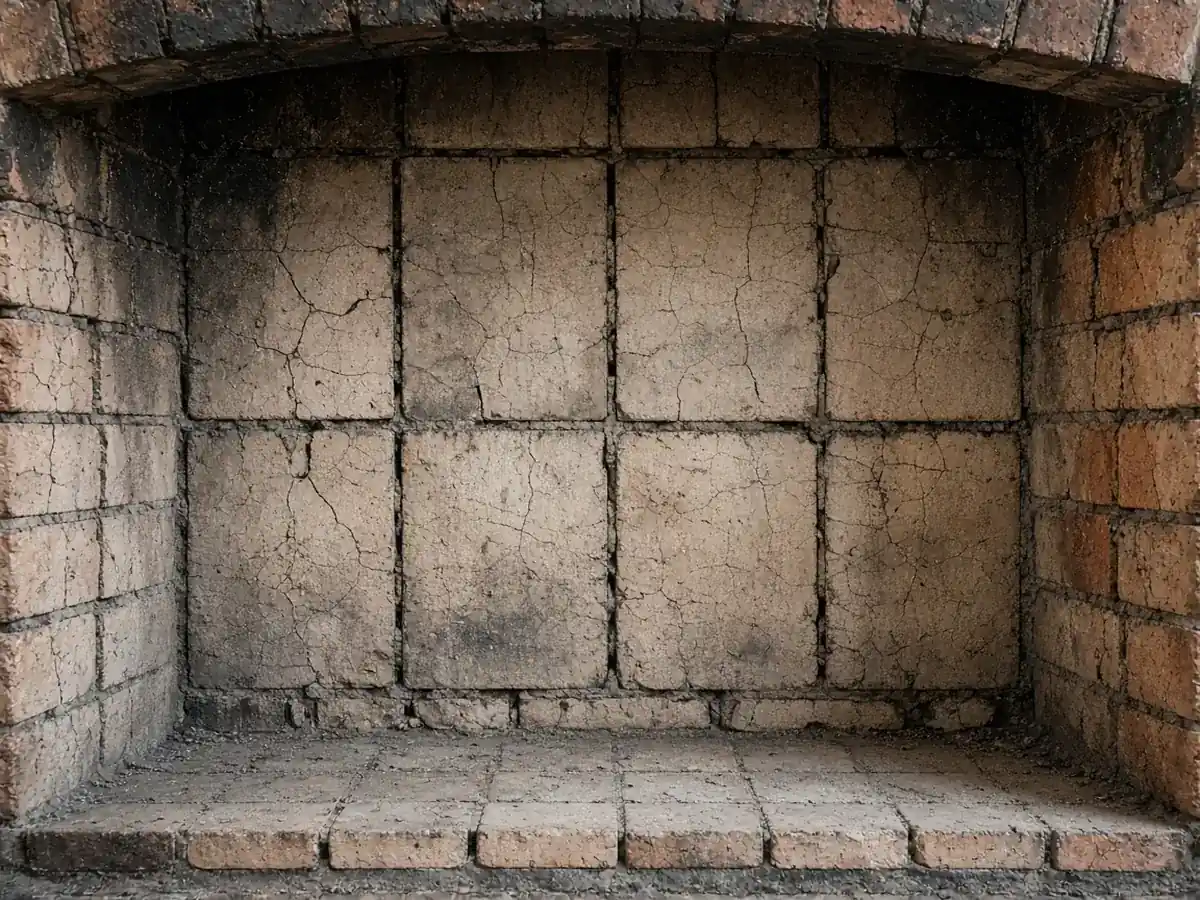
Parts of a Masonry Fireplace
- Firebox: the chamber where the fire burns, lined with firebrick set in heat-resistant refractory mortar.
- Hearth: the floor of the firebox and the non-combustible extension in front of it that protects the floor from embers.
- Damper: a metal plate that opens to let smoke out and closes to keep heated air in when the fireplace is not in use.
- Smoke shelf and smoke chamber: the area above the damper where smoke funnels into the flue.
- Flue: the passage that carries smoke out of the house.
Common Fireplace Problems and Repairs
Cracked or loose firebrick
Firebrick takes direct heat and repeated expansion and contraction. Over time, bricks crack and refractory mortar joints erode. Small cracks are normal, but gaps wider than a hairline in the firebox can let heat reach the masonry and framing behind it. Repairs range from re-pointing joints with refractory mortar, to replacing individual bricks, to rebuilding the firebox walls. Regular mortar should never be used in a firebox because it cannot handle the heat.
Rusted, stuck or broken damper
Throat dampers rust when water gets into the chimney, often through an uncapped flue or a cracked crown. A damper that is stuck open lets heated air escape all winter; one stuck closed makes the fireplace unusable and dangerous to light. Options include repairing or replacing the throat damper or installing a top-sealing damper at the top of the chimney. Top-sealing dampers seal tightly with a rubber gasket, keep out rain and animals, and are operated by a cable down to the firebox. Fixing the source of the water is part of a lasting repair.
Smoke chamber damage
The smoke chamber is often built with stepped or rough bricks that catch creosote and create turbulence. Gaps and deteriorated mortar here can let heat and gases reach combustible materials. Smoke chamber parging, where a technician applies a smooth, heat-resistant coating, seals gaps and improves smoke flow. This is a common recommendation after a Level 2 inspection.
Smoking fireplace
When smoke rolls into the room, common causes include:
- A closed or partly closed damper.
- A blocked flue from creosote, a nest or debris.
- A flue that is too small for the size of the fireplace opening.
- A chimney that is too short, or nearby trees or roof sections causing downdrafts.
- A cold flue, especially on exterior chimneys.
- Negative pressure in a tightly sealed house, where exhaust fans or other appliances compete for air.
Solutions vary, including cleaning, a smoke guard that reduces the height of the fireplace opening, raising the chimney, a draft-improving cap, or providing more makeup air. Warming the flue before lighting a fire, such as by holding a lit roll of newspaper near the damper, can help with cold-flue problems.
Cracked hearth or loose surround
Cracks in the hearth extension or a loose surround can let embers reach combustible flooring and materials. These are typically repaired by resetting or replacing masonry, tile or stone.
Fireplace doors and screens
Glass doors can help control drafts and keep sparks in the firebox, but the glass needs to be rated for the heat of the fireplace. Damaged or warped doors, loose frames or broken glass should be replaced. Doors on factory-built fireplaces must be approved for that specific unit.
Factory-Built and Gas Fireplaces
Many newer homes and additions in Sterling Heights have factory-built (prefabricated) fireplaces with metal fireboxes and metal chimney pipe. These units are tested and listed as complete systems. Repairs often involve replacing refractory panels, damper parts or chimney sections with parts approved by the manufacturer. Cracked refractory panels should be replaced promptly because they protect the metal firebox.
Gas fireplaces and gas log sets have their own common issues:
- Pilot will not stay lit: often a dirty or failing thermocouple or thermopile, or a pilot assembly that needs cleaning.
- Weak or uneven flames: clogged burner ports, misplaced logs or embers, or gas pressure issues.
- Soot on the glass or logs: incorrect log placement, air shutter adjustment, or burner problems.
- Odors: a new unit burning off manufacturing residue is normal for a short period, but persistent odors should be checked.
Annual service for gas fireplaces includes cleaning, checking the venting and components, and confirming safe operation. Anyone who smells gas should leave the house and call the gas utility or 911 from outside.
Fireplace Inserts
A fireplace insert is a wood, gas or pellet appliance installed inside an existing fireplace to make it more efficient. Inserts typically require a properly sized, listed liner running from the insert to the top of the chimney. If you are considering an insert, have the chimney inspected first; the condition of the firebox, smoke chamber and flue will affect the installation. See chimney liner installation.
Safety First
Stop using the fireplace and have it inspected if you notice:
- Gaps or missing mortar in the firebox.
- Pieces of flue tile in the firebox.
- Smoke or odors entering the house during or after use.
- Signs of overheating, such as discolored walls, mantels or surrounds.
- A carbon monoxide alarm while the fireplace is in use.
Make sure your home has working smoke and carbon monoxide alarms, and keep combustibles such as furniture, rugs and decorations a safe distance from the fireplace opening.
What Affects the Cost of Fireplace Repair
- Type of fireplace: masonry, factory-built or gas.
- Extent of firebox damage.
- Damper repair vs. replacement vs. top-sealing damper.
- Smoke chamber parging.
- Parts availability for factory-built or gas units.
Fireplace Repair Questions
Can I use my fireplace if a few firebricks are cracked?
Hairline cracks are common, but wider gaps, missing mortar or loose bricks should be repaired before use. A chimney professional can tell you whether the damage affects safety.
What is a top-sealing damper?
It is a damper installed at the top of the chimney with a spring-loaded lid that seals tightly against a gasket. It replaces or supplements a throat damper, keeps heat in, and keeps rain, debris and animals out.
Why does my fireplace smell bad in the summer?
Creosote and soot deposits in the flue can produce odors in warm, humid weather, especially when air is drawn down the chimney. Cleaning the chimney, closing the damper, and using a top-sealing damper typically help.