The flue liner is the part of the chimney you never see, but it does some of the most important work in the house. It contains heat so the surrounding wood framing does not overheat, it carries smoke and combustion gases outside, and it protects the masonry from the acids and moisture in those gases. When a liner is cracked, missing or the wrong size for the appliance it serves, the chimney becomes less safe and wears out faster. Relining is one of the most common major chimney repairs in older Sterling Heights homes.
What a Chimney Liner Does
- Protects the house from heat. Building code tests and standards for liners are based on keeping nearby combustible materials from igniting, including during a chimney fire.
- Protects the masonry. Combustion gases from wood and gas contain moisture and acids. A liner keeps them from soaking into brick and mortar.
- Makes the flue the right size. Draft depends on flue size. A liner sized for the appliance helps smoke and gases rise properly and reduces condensation and creosote buildup.
Types of Chimney Liners
Clay tile liners
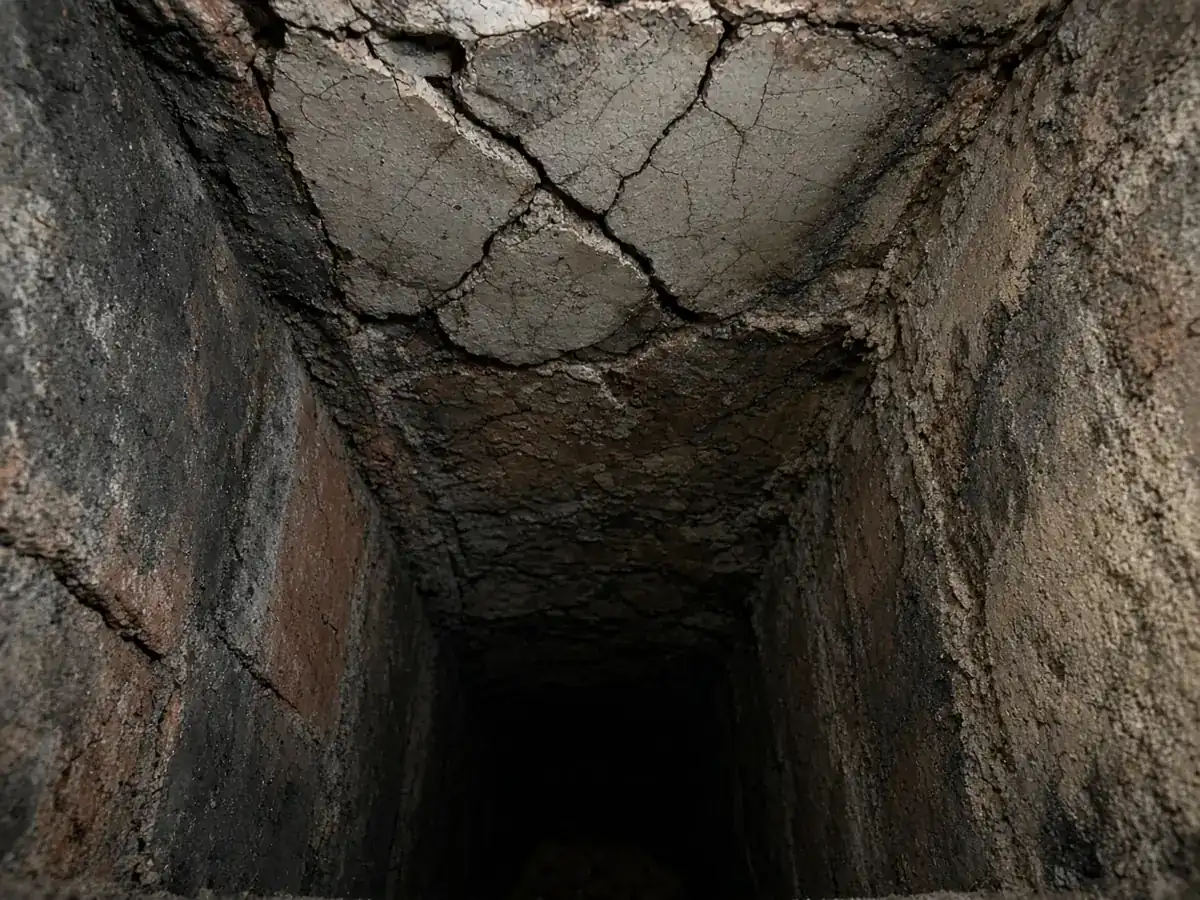
Most masonry chimneys built in the last century have clay tile liners: square or rectangular sections of terra cotta stacked inside the chimney and joined with mortar. Clay tiles are inexpensive and durable under normal conditions, but they do not handle rapid heating well. A chimney fire can crack tiles, and years of acidic condensation from gas appliances can erode the mortar joints between them. Damaged clay tiles are very difficult to replace individually without tearing into the chimney.
Stainless steel liners
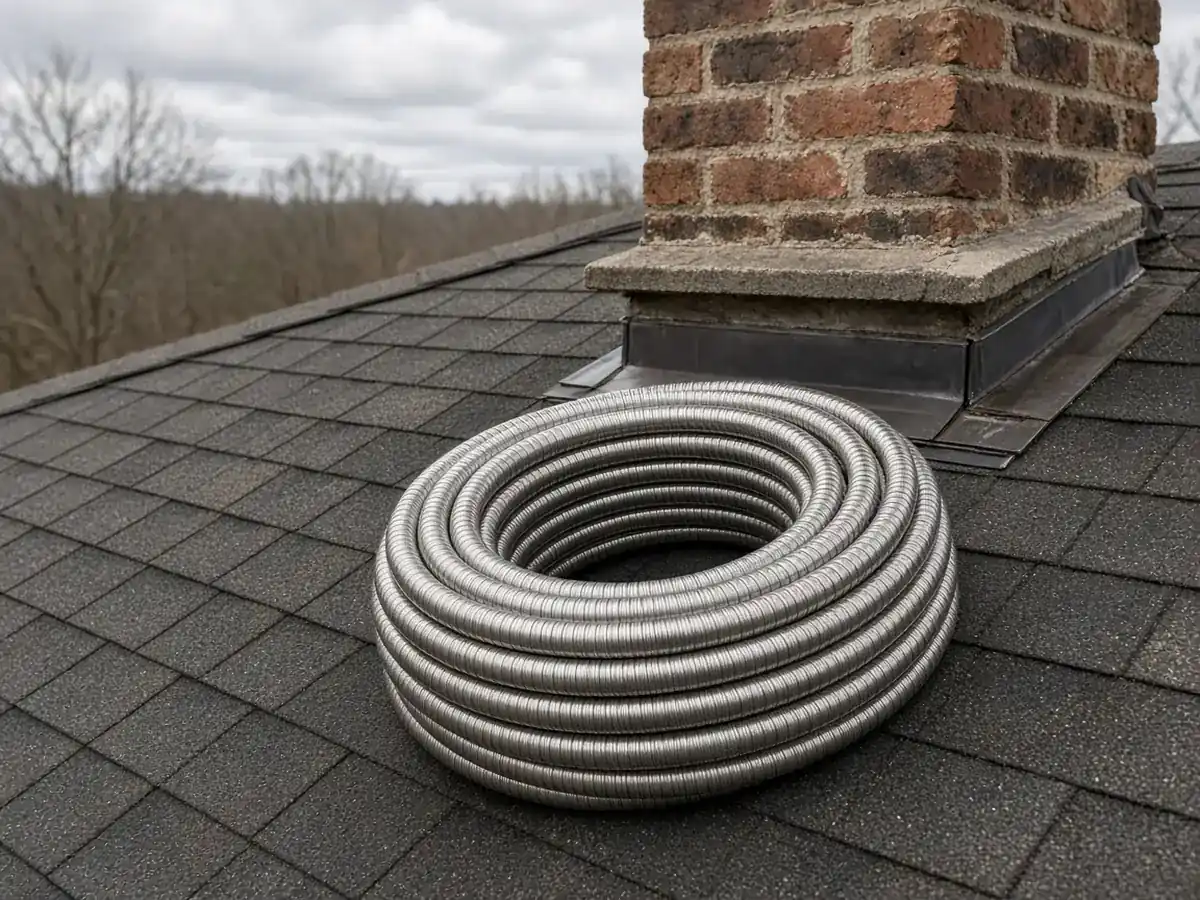
Stainless steel liners are the most common way to reline an existing chimney. They come in rigid and flexible forms and are fed down the existing flue, then connected to the appliance at the bottom and fitted with a top plate and cap. Quality systems are listed to the UL 1777 safety standard and often carry long manufacturer warranties when installed correctly. Different alloys are used for different fuels, and liners for wood-burning appliances are often insulated to meet clearance requirements and keep flue gases warm.
Aluminum liners
Aluminum liners are used only for certain gas appliances, typically mid-efficiency furnaces and water heaters. They are less expensive but are not suitable for wood or for high-temperature use.
Cast-in-place liners
A cast-in-place liner is a cement-like mixture poured or pumped into the chimney around an inflatable form. When it cures, the form is removed, leaving a smooth, insulated flue. Cast-in-place systems can also add some structural strength to an older chimney. They are typically more expensive and less common than stainless steel.
When Does a Chimney Need a New Liner?
- A camera inspection finds cracked or missing tiles. This is the most common reason. Cracks often go unnoticed for years.
- After a chimney fire. A chimney fire can reach extremely high temperatures and frequently damages clay liners. Many chimney fires go unnoticed by homeowners.
- When installing a fireplace insert or wood stove. Inserts and stoves usually need a liner sized for the appliance running the full height of the chimney.
- When replacing a furnace or water heater. If a new furnace vents through the side of the house and the water heater is left alone in a large masonry flue, the flue may be too big, causing poor draft and condensation. A properly sized liner corrects this.
- When the chimney was never lined. Some older chimneys have no liner at all.
- When the flue is too large or too small. Draft problems often trace back to flue sizing.
Signs of Liner Problems
- Pieces of tile in the firebox or at the cleanout.
- Smoke or odors in the house, especially from other rooms near the chimney.
- White staining on the outside of the chimney, especially on chimneys that vent gas appliances.
- Crumbling mortar at the base of the flue or in the basement near the cleanout door.
- A water heater or furnace that has trouble venting, or a carbon monoxide alarm.
Carbon monoxide is odorless. Every home with a fuel-burning appliance or attached garage should have working carbon monoxide alarms on every level and near sleeping areas. If an alarm sounds, get everyone outside and call 911 or the gas company.
How Stainless Steel Liner Installation Works
- Inspection and sizing. The technician inspects the existing flue with a camera and confirms the appliance's venting requirements to size the liner correctly.
- Preparation. Obstructions are cleared, and in some cases the existing tiles are partially removed to make room for a liner with insulation.
- Insulation. For wood-burning applications, the liner is often wrapped in insulation to meet clearance requirements.
- Installation. The liner is lowered from the roof down the flue and connected to the appliance, insert or fireplace at the bottom.
- Top termination. A top plate seals the space around the liner at the crown, and a listed cap is installed.
- Testing. For gas appliances, venting is checked to confirm proper draft.
Many liner installations are completed in a single day. In Sterling Heights, a permit may be required for relining or for connecting new appliances; your installer should know the local requirements.
What Affects the Cost of a New Liner
- Liner type: aluminum, flexible stainless, rigid stainless or cast-in-place.
- Diameter and length of the flue.
- Whether insulation is required.
- Whether existing tiles must be removed.
- Fuel type and appliance connection.
- Roof access and chimney height.
- Permit costs.
Liners for gas water heaters are usually the least expensive. Insulated stainless steel liners for wood stoves and inserts, and cast-in-place systems, are at the higher end.
Liners and Gas Appliances
Many Sterling Heights homes have a masonry chimney that vents a gas furnace, a water heater, or both. Gas burns cleaner than wood, but its exhaust contains a lot of water vapor. Modern furnaces extract more heat, so their exhaust is cooler and more likely to condense inside a large, cold masonry flue. Combined with combustion acids, that condensation slowly erodes mortar and tile. If you see crumbling mortar at the cleanout, or the chimney exterior is stained white, ask a professional to check whether the flue needs a liner sized for the appliances.
Chimney Liner Questions
How do I know if my chimney liner is cracked?
Usually you cannot tell without a camera inspection. Pieces of tile in the firebox, smoke odors or a past chimney fire are clues, but a video scan of the flue is the reliable way to find cracks and gaps.
How long does a stainless steel chimney liner last?
A properly sized, listed stainless steel liner using the correct alloy for the fuel can last for many years and often comes with a long manufacturer warranty. Using the wrong alloy or skipping maintenance shortens its life.
Do I need a liner for a gas fireplace or furnace?
Gas appliances need a flue that is properly sized and protected from condensation. Many older masonry chimneys serving gas appliances benefit from a liner. A professional can check the size and condition of your flue.