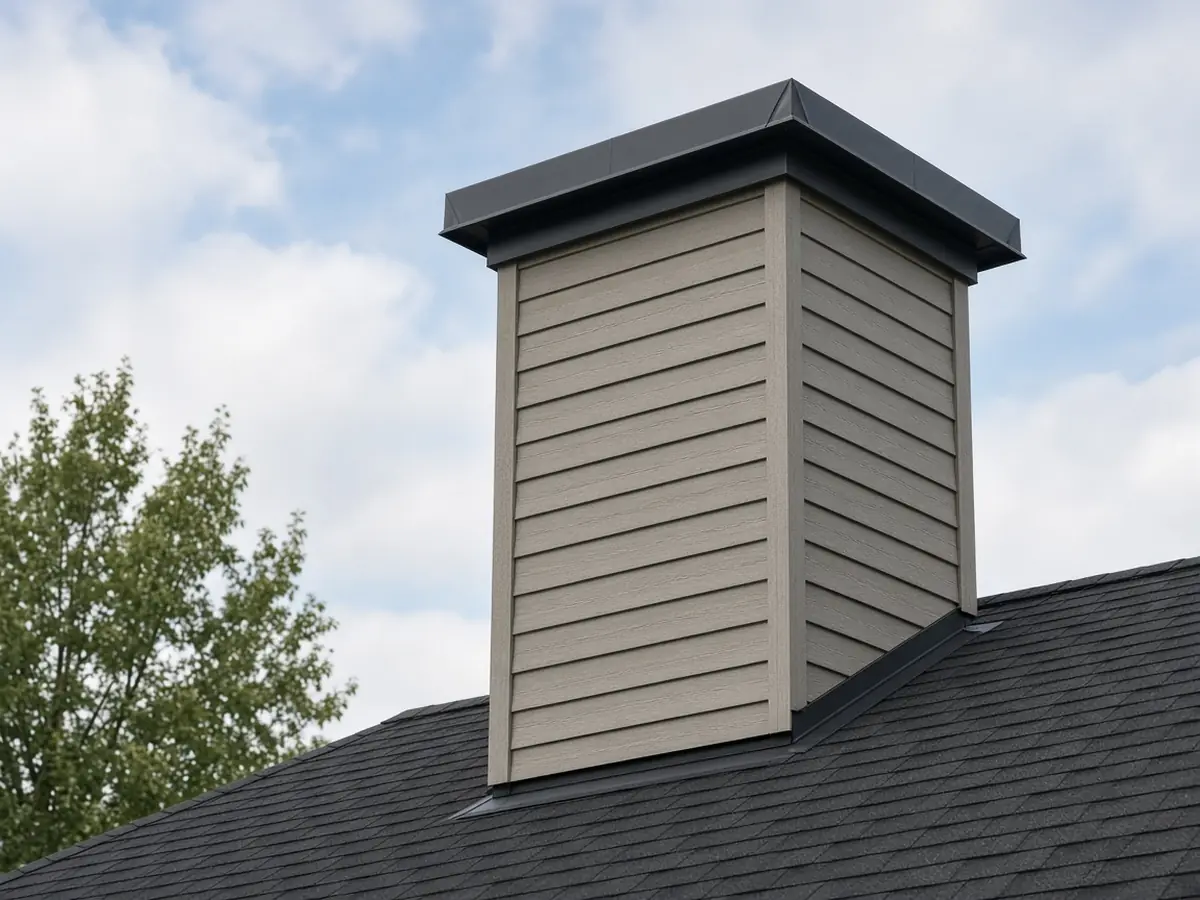
An uncapped chimney is an open hole in your roof. Rain and snow fall straight down the flue, leaves and twigs collect on the smoke shelf, and animals look at it as a ready-made home. A chimney cap is a small, relatively inexpensive part that prevents all of that. On homes with a factory-built fireplace, the chimney is often a wood-framed box covered in siding, called a chase, and the metal panel on top of it is a chase cover. Both protect the chimney from water, which is the root of most chimney damage.
What a Chimney Cap Does
- Keeps water out. Rain and melting snow that enter an open flue rust dampers, soak the smoke chamber and firebox, and can damage clay flue tiles.
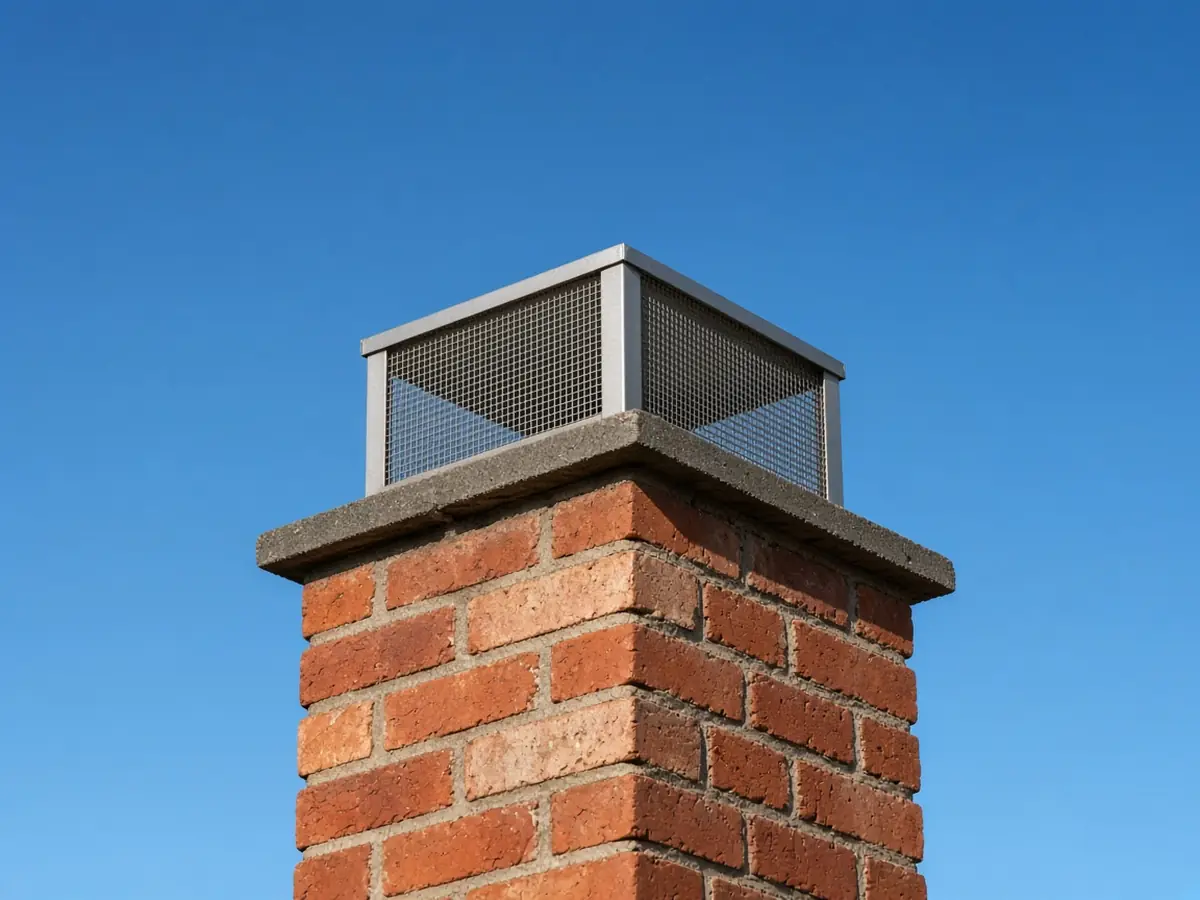
- Keeps animals out. Raccoons, squirrels, birds and bats regularly nest in uncapped chimneys around Macomb County. A cap with mesh sides blocks them. In many places, removing animals once they are inside involves rules about wildlife, and some birds, such as chimney swifts, are federally protected.
- Keeps debris out. Leaves, sticks and nesting material can block the flue and create a fire or carbon monoxide hazard.
- Acts as a spark arrestor. Mesh helps stop large embers from landing on the roof or nearby trees.
- Can reduce downdrafts. Some cap designs help reduce wind-driven downdrafts that push smoke into the house.
Types of Chimney Caps
Single-flue caps
These attach directly to the top of an individual flue tile, usually with clamps or bolts. They are common on chimneys with one flue and are typically the least expensive option.
Multi-flue or outside-mount caps
When a chimney has more than one flue, such as a fireplace flue and a furnace flue side by side, a larger cap can cover all flues at once. These mount to the crown or the outside of the chimney. Covering multiple flues together can also protect more of the crown.
Full-width chimney covers
A full-width cover, sometimes called a chimney shroud or top, covers the entire top of the chimney, protecting the crown along with the flues. These are often custom made to fit and can be a good long-term option when the crown is in rough shape.
Top-sealing damper caps
A top-sealing damper combines a cap with a damper that closes at the top of the chimney using a spring-loaded lid and a cable that runs down to the firebox. When the fireplace is not in use, it seals the flue much more tightly than an old cast-iron throat damper, keeping heated air in and outside air, insects and moisture out. It is a popular replacement for rusted or broken throat dampers.
Draft-improving caps
For chimneys that suffer from wind-related downdrafts, specialty caps designed to use wind to improve draft are available. They are worth discussing with a technician if the fireplace smokes on windy days.
Cap Materials
- Stainless steel. The most popular choice because it resists rust and holds up for many years.
- Copper. Attractive and long-lasting, usually chosen for appearance on higher-end homes.
- Galvanized or painted steel. Inexpensive, but tends to rust much sooner, especially in a wet climate. Rusted caps often stain the crown and brick below them.
Mesh size matters too. Mesh that is too fine can clog with soot and creosote on wood-burning flues, while mesh that is too coarse can let small animals through. Gas appliance flues may need caps listed for that use.
Chase Covers for Factory-Built Fireplaces
Many homes built or remodeled in the last few decades have a prefabricated, or factory-built, fireplace with a metal chimney pipe running up through a framed chase on the outside of the house. The top of the chase is closed off with a metal chase cover, and the chimney pipe passes through it with its own cap.
Older chase covers were often made of thin galvanized steel and flat on top. Over time they rust, sag and collect water, which then leaks through rust holes or seams into the chase. That water can rot the framing, ruin the siding, and run down into the fireplace. Signs of a failing chase cover include rust streaks down the siding, water in the fireplace, and a top that looks dented or sagging.
Replacement chase covers are usually custom fabricated in stainless steel or copper, with cross-breaks or a sloped design that sheds water, and a drip edge that directs water away from the siding. A new storm collar around the chimney pipe seals the opening.
How Cap and Chase Cover Installation Works
- The technician measures the flue tiles or chase top. Custom caps and covers are fabricated to those measurements.
- The old cap or cover is removed, and the crown or chase top is inspected for damage.
- Any rust, rot or crown cracks are noted. Damaged wood under a chase cover should be repaired before the new cover goes on.
- The new cap or cover is installed and secured, and seams or openings are sealed.
A stock single-flue cap can sometimes be installed during an inspection or sweep visit. Custom covers usually need a second visit.
Animals in the Chimney
If you hear scratching, chirping or crying from the chimney, do not light a fire, which can trap or kill animals and fill the house with smoke. Keep the damper closed and call a professional. Depending on the animal, removal may need to be handled by a wildlife specialist. Once the chimney is clear, a properly fitted cap keeps animals from coming back.
What Affects the Cost
- Single-flue vs. multi-flue vs. full-width cover.
- Stock vs. custom-fabricated sizes.
- Stainless steel vs. copper.
- Roof height and pitch.
- Whether crown or chase repairs are needed first.
Chimney Cap Questions
Do I need a chimney cap if I never use my fireplace?
Yes. An unused chimney still lets in rain, snow, debris and animals. Water entering an unused flue can damage the masonry and the interior just as much as in a chimney that is used.
How long does a stainless steel chimney cap last?
Quality stainless steel caps commonly last many years and often decades, far longer than galvanized caps, which can rust within a handful of years in a wet climate.
My chase cover is rusting. Can it be painted?
Painting may slow rust on a cover that is still solid, but once a galvanized chase cover has rust holes or sags and holds water, replacing it with a sloped stainless steel cover is the more reliable fix.