A leaking chimney is frustrating because the water rarely shows up where it gets in. You might see a brown stain on the ceiling, peeling paint beside the fireplace, water in the firebox, or a damp, musty smell in the room, but the actual entry point can be anywhere from the top of the chimney to the shingles around its base. The most common culprit is the flashing, the metal that seals the joint between the chimney and the roof. This guide explains how chimney leaks happen, how flashing works and fails, and how a professional tracks down and fixes the source.
Where Chimney Leaks Come From
Before blaming the flashing, a good technician checks every possible entry point:
- Flashing. Loose, rusted, lifted or improperly installed flashing at the roofline.
- Crown. A cracked or poorly built crown lets water into the top of the chimney. See chimney crown repair.
- Uncapped flue. Rain and snow fall straight down the flue. See chimney caps.
- Brick and mortar. Porous brick and open mortar joints absorb a surprising amount of water. See tuckpointing and waterproofing.
- Chase cover. On framed chimneys, a rusted or flat chase cover can leak into the chase.
- Condensation. Sometimes the moisture is not rain at all, but condensation from a gas appliance venting into an oversized or unlined flue.
Many leaking chimneys have more than one problem. Fixing only one can reduce the leak without stopping it, which is why an inspection should cover the whole system.
How Chimney Flashing Works
Flashing is a two-part system on a properly built chimney:
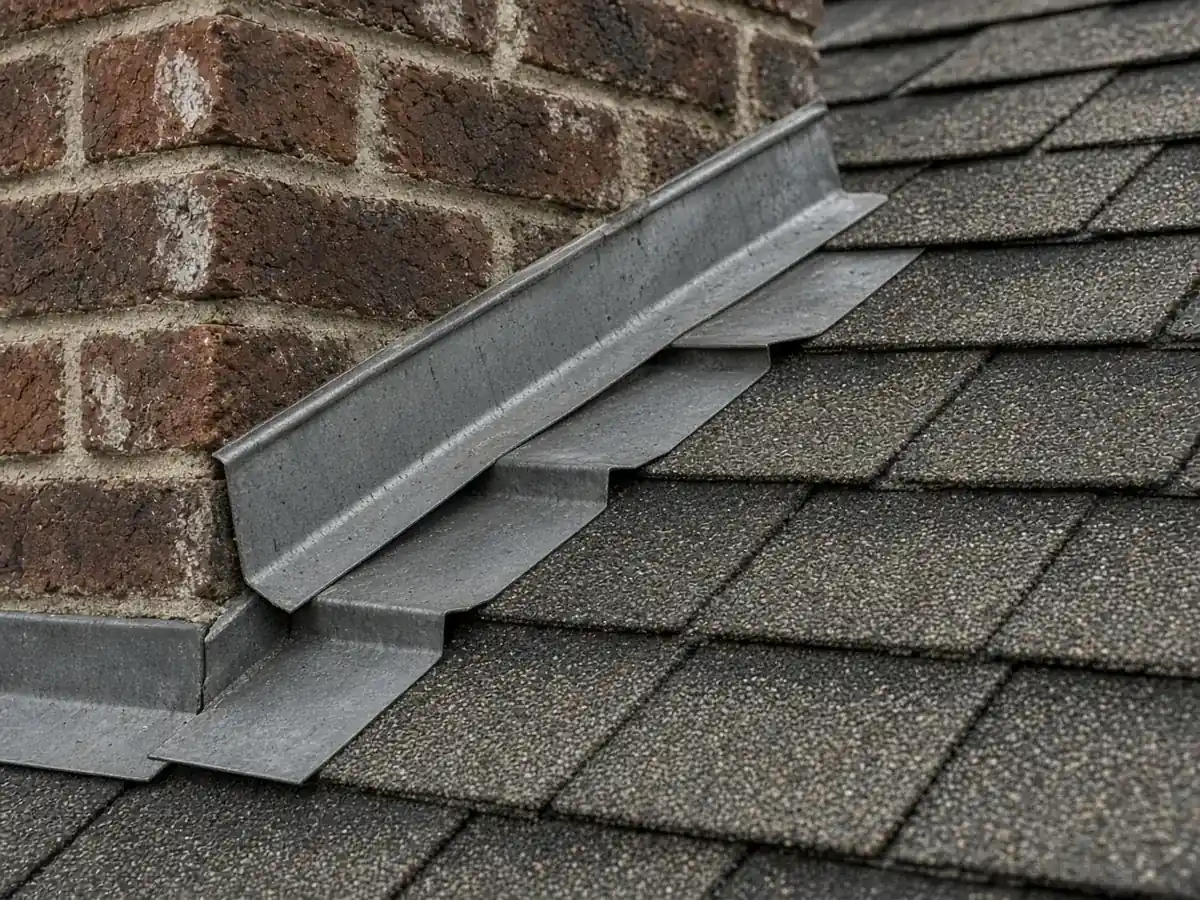
- Step flashing is a series of L-shaped metal pieces woven in with each course of shingles along the sides of the chimney. Each piece overlaps the one below, so water runs down and off.
- Counter flashing (or cap flashing) is set into a cut groove in the mortar joints of the chimney and folds down over the top of the step flashing. It allows the roof and chimney to move independently without opening a gap.
The uphill side of the chimney usually has a larger piece of flashing, and wider chimneys should have a cricket or saddle, a small peaked structure behind the chimney that splits water and snow and sends it around the sides. Building codes typically require a cricket on chimneys wider than 30 inches measured across the roof slope. Without one, water and ice dam up behind the chimney, which is a common source of leaks in snowy climates.
Why Flashing Fails
- Caulk-only installations. Many chimneys have flashing that is simply glued or caulked to the face of the brick, or covered in roofing tar. Sealants dry out and crack within a few years.
- Corrosion. Older galvanized or thin aluminum flashing corrodes over time.
- Roof replacements. When a roof is replaced, the chimney flashing should be replaced or properly reinstalled. Sometimes it is reused, bent, or tarred over.
- Movement. The house, roof and chimney move with temperature and settling. Rigid or poorly lapped flashing pulls loose.
- Ice dams. Snow and ice piling behind the chimney push water up under the shingles and flashing.
- Deteriorated mortar. If the mortar joints holding the counter flashing crumble, the flashing loosens.
Signs of Flashing Problems
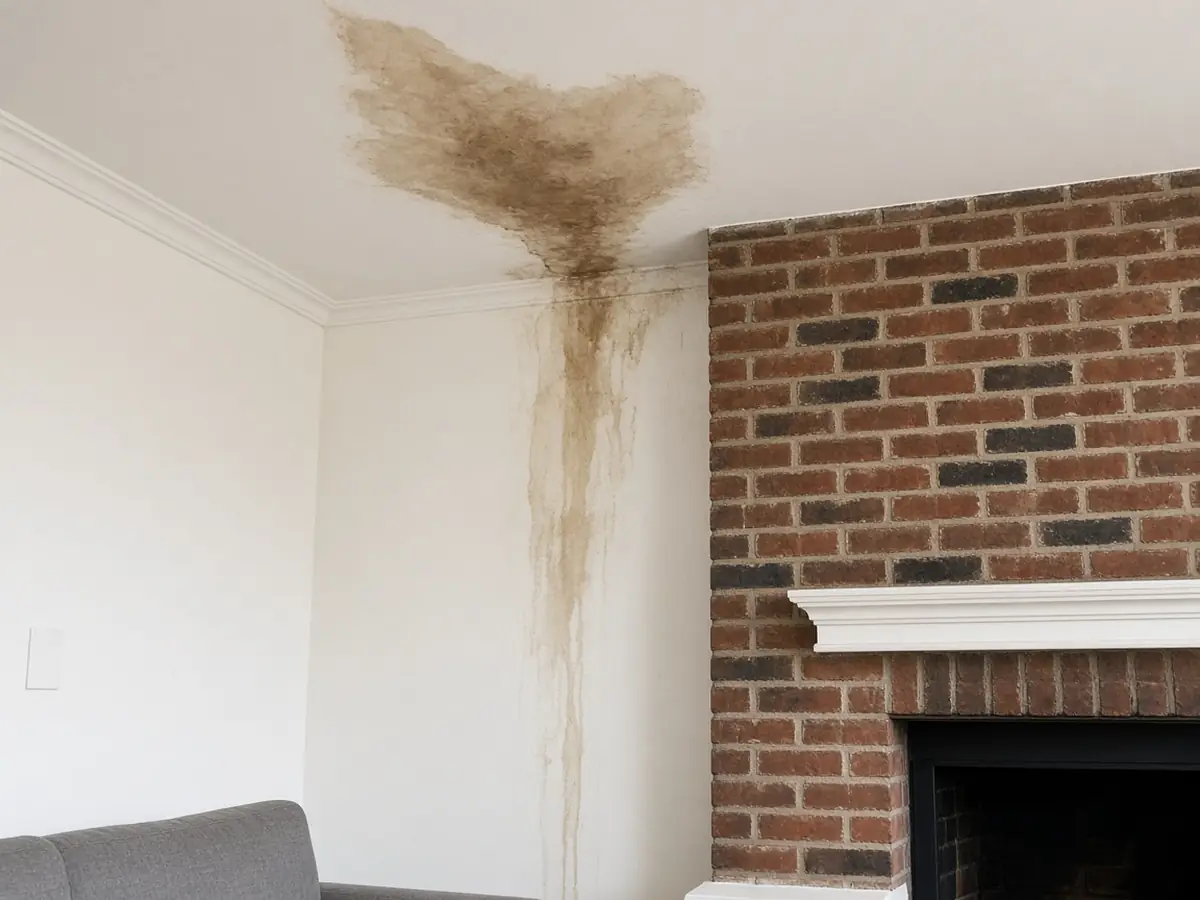
- Water stains on the ceiling or walls beside the chimney, especially after heavy rain or snowmelt.
- Wet or rotting roof decking or rafters around the chimney, visible from the attic.
- Flashing that is lifted, bent, rusted or coated in thick roofing tar.
- Gaps between the flashing and the brick.
- Missing or cracked caulk along the counter flashing.
How Chimney Leak Repair Is Done
Diagnosis
The technician inspects the roof, flashing, crown, cap and masonry, and checks the attic if possible to see where water stains or rot appear on the framing. Sometimes a controlled water test is used: water is run over one area at a time while someone watches inside, which isolates the source.
Flashing repair
If the flashing is in decent shape but has loose sections or failed sealant, it may be resealed and re-secured. Sealants used should be suitable for masonry and metal and remain flexible.
Flashing replacement
When the flashing is corroded, improperly installed or caulk-only, replacement is the lasting fix. Shingles around the chimney are carefully lifted or removed, new step flashing is woven in with the shingle courses, a reglet is cut into the mortar joints for new counter flashing, and the counter flashing is set and sealed. If a cricket is missing on a wide chimney, it can be framed and flashed at the same time. Many homeowners schedule flashing replacement when they replace their roof.
Fixing the other sources
If the crown, cap, masonry or chase cover is contributing, those are repaired along with the flashing. Once everything is fixed and cured, a breathable water repellent on the brick helps keep the chimney dry.
Interior Damage
After the leak is stopped, check the interior. Wet drywall and insulation can hold moisture and grow mold. Small stains can be sealed with a stain-blocking primer and painted once dry. Larger areas of soft drywall, damaged framing, or mold may need to be repaired by a drywall or restoration contractor.
What Affects the Cost of Leak Repair
- Repairing vs. replacing flashing.
- Roof type, pitch and height.
- Chimney width and whether a cricket is needed.
- Additional work on the crown, cap or masonry.
- Shingle condition around the chimney.
Chimney Leak Questions
Why does my chimney only leak in late winter?
Melting snow and ice dams often cause leaks that do not happen during ordinary rain. Snow piles up behind the chimney, melts during the day, refreezes at night, and pushes water under shingles and flashing. Freeze-thaw cycles also open cracks in the crown and mortar.
Can roofing tar fix a leaking chimney?
Tar and caulk can slow a leak temporarily, but they crack as they age and can trap water. A lasting repair uses properly installed step and counter flashing.
Should I replace my chimney flashing when I get a new roof?
In most cases, yes. Coordinating the two saves money and avoids reusing old or damaged flashing. Talk with your roofer and chimney professional about who will handle it.